
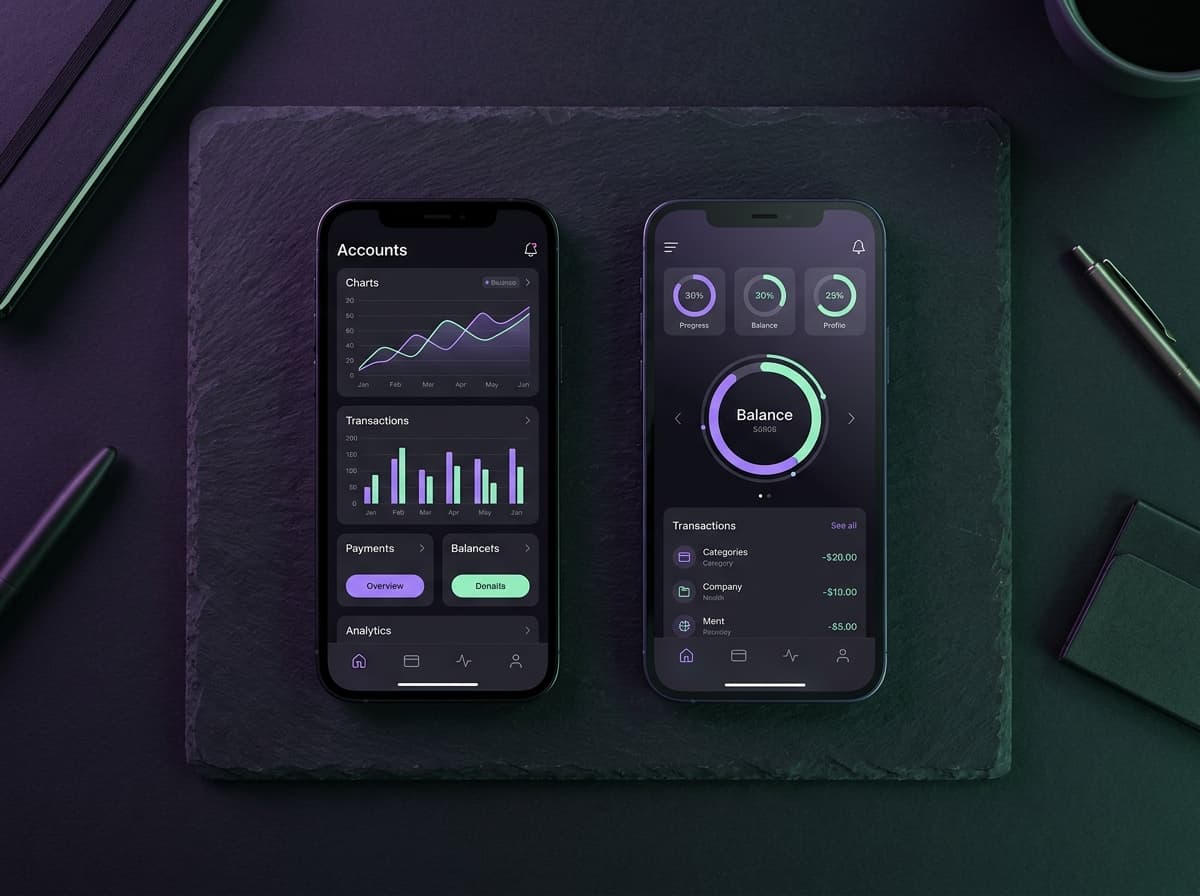
A neobank is a financial institution with no branches, built around an app: you open an account from your smartphone, get an IBAN and a card, and run everything in the app. In Belgium, the word says nothing about legal status. Revolut, N26 and bunq are banks licensed abroad; Wise is not a bank at all.
What is a neobank, in one sentence?
A bank, or something that looks like one, that exists only inside an app.
The term comes from marketing, not from the law. Belgian law recognises credit institutions, payment institutions and electronic money institutions, and nothing else: to know what a neobank really is, you have to read the line at the bottom of its terms and conditions that names the legal entity and its regulator. When I worked as an adviser in a bank branch, customers would show me their new « internet bank » card without knowing which country their money was registered in. They were not wrong to open it. They had skipped the only line that matters.
How does a neobank work without branches?
Everything goes through the app, from opening the account to filing a complaint. You photograph your identity card, film your face for verification, and the account is usually active the same day. The Visa or Mastercard debit card is available straight away as a virtual card, and arrives as a physical card a few days later.
The institution itself is often licensed elsewhere. Thanks to the European passport, a bank authorised in Lithuania or Germany can serve Belgian customers without a Belgian licence, either remotely or through a branch. That explains the foreign IBAN many neobanks hand out, and why two of them, Revolut and Trade Republic, have opened a branch in Brussels so they can issue BE IBANs. The difference in status is covered in our article on e-money institutions versus banks.
Which neobanks operate in Belgium?
Here are the six we follow, all open to Belgian residents for a personal account. Vivid Money, often mentioned, is not one of them: its personal account does not accept Belgian residents.
| Neobank | Entity and licensing country | Status | IBAN issued | Deposit guarantee | Checked |
|---|---|---|---|---|---|
| Revolut | Revolut Bank UAB, Lithuania, Belgian branch | Bank | BE or LT | Lithuanian, €100,000 | 18/10/2026 |
| N26 | N26 Bank AG, Germany | Bank | DE | German, €100,000 | 18/10/2026 |
| bunq | bunq B.V., Netherlands | Bank | NL | Dutch, €100,000 | 18/10/2026 |
| Aion Bank | Bank licensed in Belgium, UniCredit group | Bank | BE | Belgian, €100,000 | 18/10/2026 |
| Trade Republic | Trade Republic Bank GmbH, Germany, Belgian branch | Bank | BE since 15/09/2026 | Through partner banks, €100,000 per bank | 29/09/2026 |
| Wise | Wise Europe SA, licensed by the NBB | Electronic money institution | BE | None: funds safeguarded | 18/10/2026 |
Status checked on the dates shown, in each institution's legal notices and the FSMA register. Legal structures change: check the entity named in your terms and conditions before leaving a large sum there.
How does a neobank make money?
Not from account fees, which are almost always zero on the entry plan. The only detailed public figures come from Revolut, which published its 2025 results on 24 March 2026: $6 billion in revenue and $1.7 billion in net profit. These are its five main revenue lines, as it presents them:
- interest income, $1.3 billion;
- card payments, $1.3 billion;
- paid subscriptions (Premium, Metal, Ultra), $936 million;
- investing, shares and crypto-assets, $876 million;
- foreign exchange, $800 million.
The card line often comes as a surprise. On every payment, the merchant pays an interchange fee to the card issuer, capped in the EU by Regulation 2015/751 at 0.2% for a consumer debit card. A €50 fuel stop therefore earns the neobank 10 cents at most. Multiplied by billions of transactions? A business.
Is your money protected in a neobank?
Yes, but not in the same way everywhere. In a neobank that holds a banking licence, your deposits are covered up to €100,000 per customer and per institution, a ceiling harmonised by Directive 2014/49/EU; the fund of the licensing country pays out, the Lithuanian one for Revolut, the German one for N26. At Wise, an electronic money institution, no guarantee fund steps in: customers' money is kept separate from the company's own, held apart, and must be returned to them if the company fails. The full mechanism is in our article on neobank deposit protection.
What are a neobank's limits in Belgium?
Almost all of them come from the Belgian system, not from the app. Before making a neobank your only account, keep these five blind spots in mind:
- no neobank active here issues a card with Bancontact, Belgium's domestic debit card scheme (checked on 18 October 2026), hence refusals at parking meters and some markets, a topic covered in neobanks and Bancontact;
- none offers a mortgage in Belgium (checked on 24 October 2026);
- cash cannot be deposited at a counter, since there is no counter;
- 078 170 170, which combines Card Stop, the Belgian card-blocking service, and, since 22 June 2026, Fraudstop for online banking access, does not cover every neobank: blocking then happens in the app;
- an account held abroad must be reported to the Central Point of Contact (CPC) of the National Bank of Belgium and in your tax return, as Wikifin, the FSMA's financial education site, points out.
Neobank or Belgian bank: which to use when?
On 20 October, Revolut had a service interruption that affected card payments among other things. That morning I paid at my bakery in Ixelles with my Bancontact card, without even thinking about it. That is the whole case for keeping two accounts.
| Situation | Best tool | Why |
|---|---|---|
| Paying a parking meter or market stall that only takes Bancontact | Belgian bank card | Neobank cards have no Bancontact |
| Paying in dollars, pounds or Swiss francs | Neobank | Network exchange rate, little or no markup on weekdays depending on the plan |
| Receiving your salary | Either works | Refusing a foreign IBAN is banned by the SEPA Regulation |
| Preparing a mortgage | Belgian bank | No neobank offers one here |
| Separating a holiday or grocery budget | Neobank | Sub-accounts and virtual cards in two taps |
| App outage | The second card | No branch to fall back on |
The setup I see most often, and have used since 2019, pairs a Belgian bank for the basics with a neobank for everything else: it is described in having several bank accounts.

Is a neobank the same as an online bank?
Almost, and Bancontact makes the difference. An online bank such as Hello bank! is backed by a Belgian group and issues a Bancontact card; a neobank does not. The point-by-point comparison is in neobank vs online bank.
In short
A neobank is an account that lives in an app, usually run by a bank licensed in another EU country. It earns its money from interest, cards, subscriptions and currency exchange, and in Belgium it runs into Bancontact, mortgages and the reporting of foreign accounts. To line up the six players side by side, fees and cards included, our comparison tool does the sorting.
This article provides general information on how neobanks operating in Belgium work. It is neither legal, tax nor investment advice.
Sources: Revolut, « Revolut reports record profit of $2.3bn for 2025 », 24 March 2026; Regulation (EU) 2015/751 on interchange fees; Directive 2014/49/EU on deposit guarantee schemes; National Bank of Belgium, Central Point of Contact FAQ; Wikifin (FSMA), « Déclarer vos comptes à l'étranger »; Febelfin, launch of Fraudstop with the Minister for Consumer Protection, 22 June 2026; Paris Match Belgique, 20 October 2026; FSMA register and legal notices of Revolut, N26, bunq, Aion, Trade Republic, Wise and Vivid checked between 29 September and 18 October 2026.
Comparatifs comparator
Compare all comparatifs side by side.
Compare now →
Frequently asked questions
Maxime suit le secteur des néobanques et de la fintech belge depuis près de dix ans. Ancien conseiller en agence devenu analyste indépendant, il ouvre et teste lui-même les comptes qu’il compare, décortique les grilles tarifaires ligne par ligne et traque les frais cachés derrière les offres « gratuites ». Son objectif : aider les Belges à payer moins et choisir une banque qui colle vraiment à leur usage, sans jargon ni argument commercial.