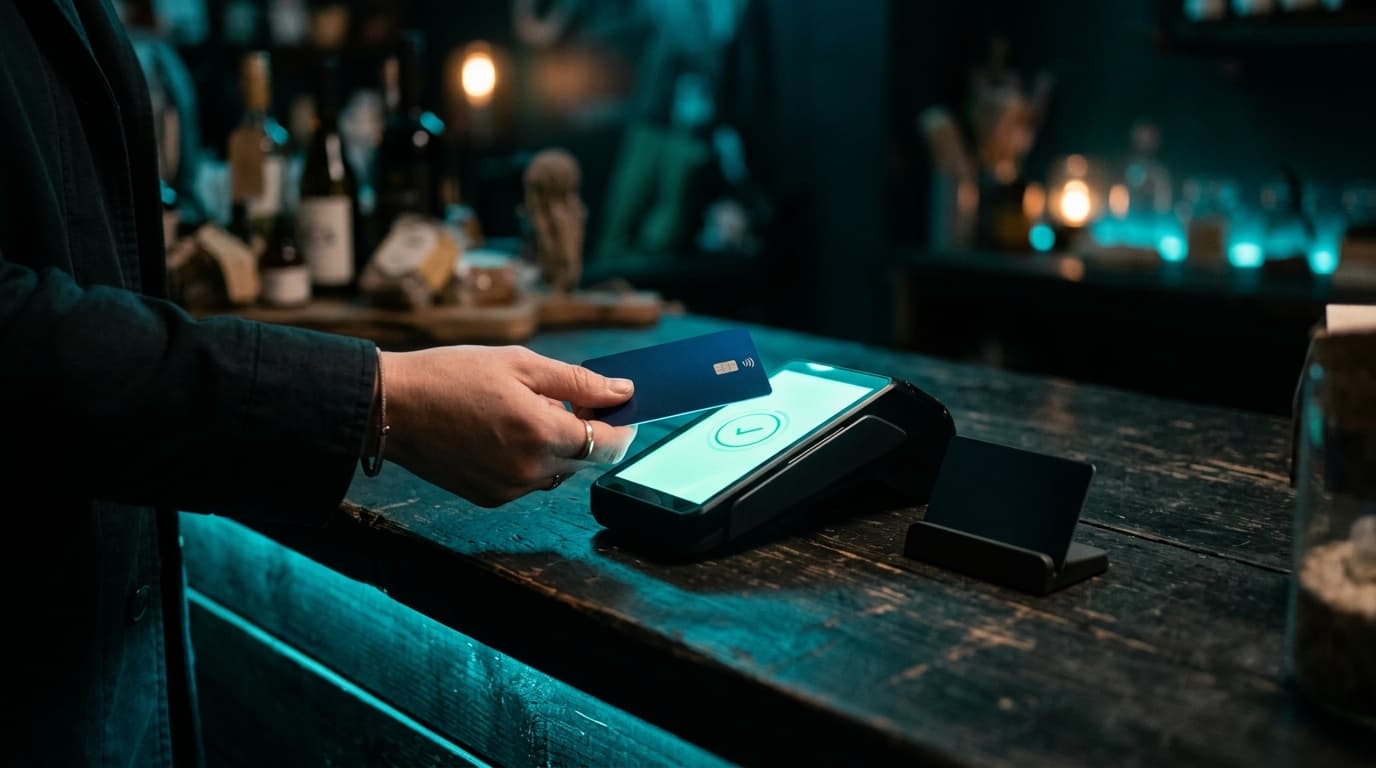
No: not a single neobank available in Belgium supports Bancontact. Not Revolut, not N26, not bunq, not Wise. Their cards run on Visa or Mastercard, accepted almost everywhere, but not on the terminals and machines that require the Belgian network. Here is where it actually hurts, and how to work around it without giving up your neobank.
Can you pay with Bancontact through a neobank?
No. No neobank operating in Belgium currently issues a card carrying the Bancontact function. The cards from Revolut, N26, bunq and Wise run on Visa or Mastercard. You pay without trouble at the supermarket, in a restaurant or online internationally, but not where the terminal only takes Bancontact.
One useful reminder, because the confusion is common: Bancontact is a Belgian debit card payment scheme, run by Bancontact Payconiq Company and distributed by banks established here. It is not just another card brand, it is a domestic network the card issuer has to join. In practice, as long as a neobank has not signed up to that scheme, its card cannot go through a terminal set to Bancontact only, even though the money is there.
I have opened and used all four accounts mentioned above. In practice, 90% of my payments go through without my noticing. The problem never turns up when you expect it: it is a Sunday morning at the market, or in front of a parking terminal, when there is no fallback left.
Why do neobanks not support Bancontact?
Because Bancontact is a national network, while the neobank model is pan-European. Issuing a Bancontact card means joining the Belgian scheme, complying with its technical rules and issuing a debit card specific to the Belgian market. For a bank rolling out one single card across some thirty countries, the business case is thin.
There is also a licensing reason. Most of these players operate in Belgium under freedom to provide services, from Lithuania for Revolut, Germany for N26, the Netherlands for bunq. Their product is standardised by design: one app, one card, the same features everywhere. Co-badging a debit card with a local network (Bancontact here, Girocard in Germany, Cartes Bancaires in France) breaks that model.
This can obviously change. Revolut already took a step by assigning a Belgian IBAN since May 2025, which few people saw coming. But an IBAN and a card are two different things: nothing has been announced on the Bancontact side, and I see no signal pointing that way in summer 2026.
Which neobanks accept Bancontact in Belgium?
None, and the table is quickly drawn. What differs from one neobank to the next is not Bancontact, it is what they offer around it: the Belgian IBAN, the card network, access to Wero for person-to-person payments.
Current picture as of summer 2026. Offers change often: always check the terms in force when you open an account.
| Neobank | Card network | Bancontact | Belgian IBAN | Wero in the app |
|---|---|---|---|---|
| Revolut | Visa or Mastercard | No | Yes, since May 2025 | Yes, since summer 2025 |
| N26 | Mastercard | No | No (German IBAN) | Announced for summer 2026 (FR, DE, NL) |
| bunq | Mastercard | No | No (Dutch IBAN) | No |
| Wise | Mastercard | No | No (euro account details) | No |
Concretely, for everyday use: if the Bancontact gap worries you, none of these four neobanks fills it. Revolut is simply the least penalising, because its Belgian IBAN also avoids direct debit refusals and it offers Wero to pay a friend back. That is a partial workaround, not a solution.
Where does the missing Bancontact really hurt?
At unattended machines and with small merchants, far more than in large chains. Bancontact is still used for about 85% of in-store card payments in Belgium, and part of the terminal fleet is configured for it alone.
The list of places where I have been stuck fits in a few lines: parking terminals, ticket machines, some self-service fuel pumps at night, markets and chip shops, a few independents who never enabled Mastercard acceptance on their terminal. Add, more rarely, Belgian e-commerce sites offering only Bancontact at checkout, or a sports club sending a Bancontact QR code for the yearly fee.
One example that cost me thirty minutes: a parking exit terminal, on a Sunday evening, with no cash machine nearby. My neobank card was declined three times before I understood that the terminal only took Bancontact. I had to call someone to come and pay. Since then I keep a Belgian card in my wallet, and I may use it five times a year — but those five times matter.
Do Apple Pay or Google Pay replace Bancontact?
No, and this is the most widespread misunderstanding. These wallets create no payment method: they carry the card you register. A Revolut card added to Apple Pay is still a Visa; an N26 card in Google Pay is still a Mastercard.
What changes with the phone is convenience and security, not acceptance. In front of a terminal that only takes Bancontact, the payment will fail in exactly the same way, physical card or phone. The interesting nuance comes from the other side: Belgian banks can put their Bancontact card into Apple Pay or Google Pay. So a Belgian bank customer's phone pays with Bancontact, a neobank customer's phone does not — the wallet has nothing to do with it.
Watch the small print: on a terminal that accepts both networks, the choice can be made automatically. If the merchant asks "Bancontact or Visa?", answer according to the card you are presenting, otherwise the transaction goes down the wrong network and ends in a refusal.
Can you link a neobank to the Bancontact app?
No. The Belgian mobile payment app, long known as Payconiq by Bancontact and renamed Bancontact at the end of 2025, only lets you register Bancontact cards issued by a Belgian bank — up to five cards, including from different banks. It accepts neither a foreign IBAN nor a card without the Bancontact function.
I ran the test, out of curiosity, with a neobank card: the card is rejected at the verification step. It is not a bug or a question of country of residence, it is how the app is designed. As a result, QR code payments, very common here for club fees, small shops and payments between individuals, stay out of reach if your only account is with a neobank.
This is probably the most underestimated limitation. Many people check whether the card is accepted, never whether the app is. Yet in Belgium a growing share of payment requests travels by QR code.

Does Wero fill the Bancontact gap?
Not yet, but it is the most serious lead. Wero is the European wallet backed by a group of major banks, launched in Belgium, France and Germany from 2024 onwards. It first handles person-to-person payments, in seconds, from one phone number to another. Online payment has been rolling out since 2026; in-store payment is announced for later.
On the neobank side, Revolut built Wero into its app in summer 2025, for its Belgian, French and German customers. N26 has announced Wero for summer 2026, starting with its French, German and Dutch customers. bunq and Wise are not part of it.
I have been using it to pay friends back: it is instant and saves asking for an IBAN. But it is worth being clear about what it solves and what it does not. Wero is gradually replacing transfers between individuals, not the card at the counter. As long as in-store payment is not deployed, the parking terminal stays out of reach. And the fact that N26 is starting without Belgium shows the timetable is not the same for everyone.
How do you pay everywhere in Belgium with a neobank?
The setup that works is simple: a neobank for everyday spending, travel and online payments, plus a basic Belgian account for the Bancontact card and the app that comes with it. Many Belgian banks charge a few euros a year for a simple current account, which is cheap insurance against a payment you cannot make.
✓ Pros
- Online and international payments: a neobank card is more than enough
- Paying friends back: Wero inside Revolut, or an instant transfer
- Direct debits and salary: Revolut's Belgian IBAN avoids refusals
- Large chains, restaurants, international e-commerce: Visa and Mastercard go through everywhere
✗ Cons
- Parking terminals and vending machines: a Bancontact card is essential
- QR code payments via the Bancontact app: Belgian cards only
- Small shops and markets: terminal sometimes set to Bancontact only
- Going out with no Belgian card at all: the real risk, whichever neobank you use
In practice, I run most of my spending through the neobank, and the Belgian card sleeps in my wallet for the five or six times a year when nothing else works. People who have recently moved here often underestimate this and open a neobank on its own: it is comfortable for two months, until the first car park. Our quiz suggests a recommendation in two minutes based on your profile, and the comparator puts the offers side by side, card network included.
In short
No neobank supports Bancontact in Belgium, and nothing suggests that will change soon. Revolut, N26, bunq and Wise issue Visa or Mastercard cards, accepted at the vast majority of points of sale but declined on terminals set to Bancontact only. Revolut's Belgian IBAN does not change that rule, nor do Apple Pay and Google Pay, and the Bancontact app remains closed to neobank cards. Wero is moving fast on person-to-person payments and e-commerce, without covering the shop counter yet. So the answer is still a pair: a neobank for what it does well, a Belgian card for the rest. To go further, compare cards line by line in our comparator, or read our guide to virtual cards from neobanks if most of your purchases happen online.
Sources: Bancontact Payconiq Company (how the scheme works, the Bancontact app and the end of the Payconiq brand announced in 2025), Febelfin (share of Bancontact in card payments), Test-Achats (Revolut's Belgian IBAN, Wero rollout in Belgium), National Bank of Belgium and FSMA (status of licensed institutions), pricing conditions and documentation from Revolut, N26, bunq and Wise consulted in July 2026.
Cartes & paiements comparator
Compare all cartes & paiements side by side.
Compare now →
Frequently asked questions
Maxime suit le secteur des néobanques et de la fintech belge depuis près de dix ans. Ancien conseiller en agence devenu analyste indépendant, il ouvre et teste lui-même les comptes qu’il compare, décortique les grilles tarifaires ligne par ligne et traque les frais cachés derrière les offres « gratuites ». Son objectif : aider les Belges à payer moins et choisir une banque qui colle vraiment à leur usage, sans jargon ni argument commercial.