
When I was a student, banking meant the youth account my parents opened and a card that cost three euros a year. Today, the first question I get on campus is more like: "Should I get N26, Revolut or bunq?" The honest answer comes in two parts: a neobank is excellent for a student budget, but it does not quite replace a Belgian account yet. Here is how I decide.
Which neobank should a student in Belgium choose?
For a student, the trio to watch in mid-2026 is Revolut for the Belgian IBAN and the most complete app, N26 for the simplicity of a no-fuss account, and bunq for its offer aimed at under-26s that opens normally paid features for free. All three are free for everyday use and built for mobile, which fits the way a student manages money.
The nuance comes straight away. None of these neobanks handles Bancontact, the network used for about 85% of card payments in Belgium. I opened all three accounts to test them, and my reflex is the same as the one I give a student: get one, but keep a Belgian youth account alongside. The neobank shines on online and abroad spending, not on the terminal at the corner bakery.
Is a student neobank really free?
The entry plan is, for the most part. With Revolut Standard, N26 and bunq's student offer, opening, account maintenance and card payments cost nothing. That already covers 90% of a student's use without spending a euro.
The fees hide on the extras, and that is where you read the small print. The physical card is paid with N26 (around €10 for the standard version), while the virtual card is free. ATM withdrawals are free up to a monthly cap, then charged. And the real exchange rate applies on weekdays; at the weekend, a small markup can be added on some plans. The real annual cost of a student neobank, in practice, depends mainly on the number of cash withdrawals and the extras, not on the account itself.
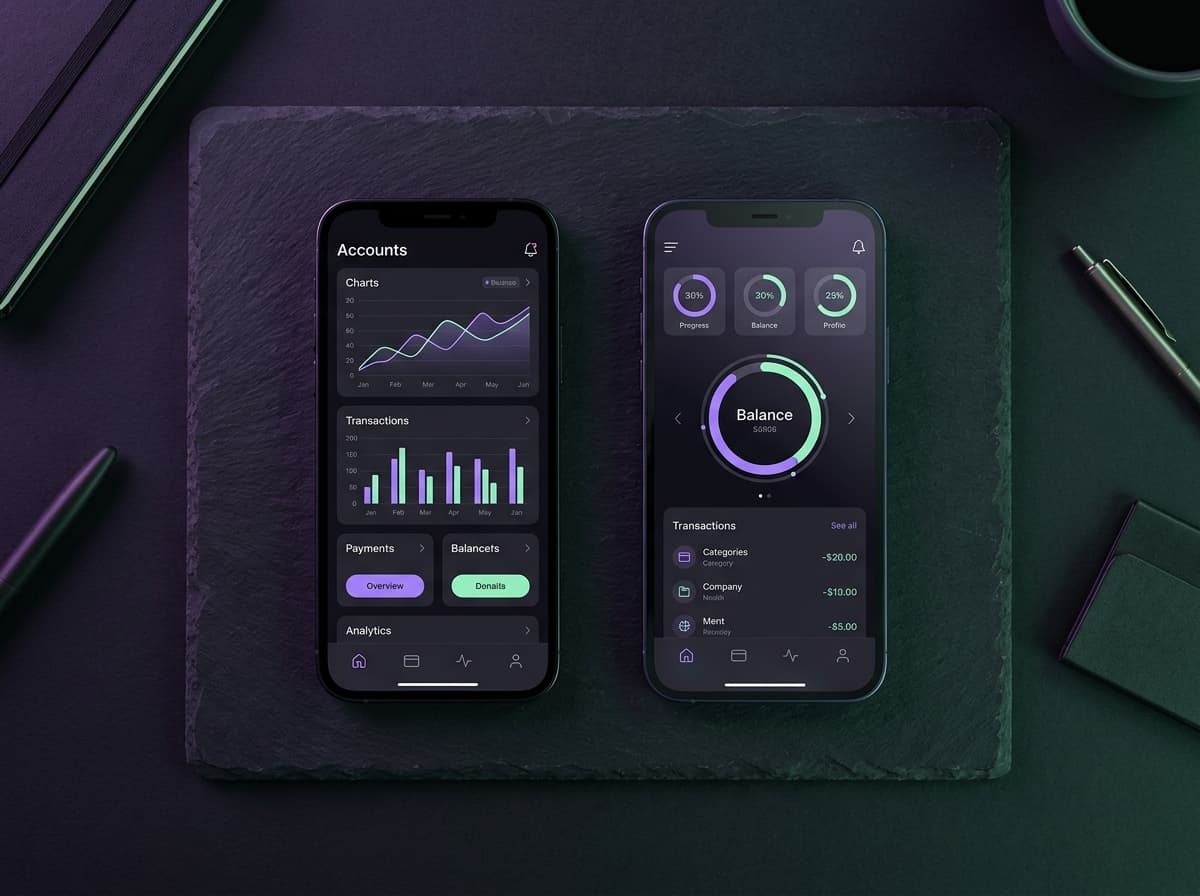
N26, Revolut or bunq: which one for a student?
None wins on every front. Revolut leads on the Belgian IBAN and features, N26 on plainness, bunq on the generosity of its youth offer. Here are the base conditions, accurate as of June 2026 — schedules move, always check the current offer before opening.
| Criterion (student / base plan) | Revolut | N26 | bunq |
|---|---|---|---|
| Free base account | Yes (Standard) | Yes | Yes (under-26 offer) |
| Belgian IBAN (BE) | Yes, since May 2025 | No (foreign IBAN) | No (foreign IBAN) |
| Physical card | Paid on order | About €10 (virtual free) | Included in youth offer |
| Bancontact | No | No | No |
| Fees abroad | Real rate, free monthly cap | Real rate, free monthly cap | Real rate |
| Licence / deposit protection | Bank (LT), €100,000 | Bank (DE), €100,000 | Bank (NL), €100,000 |
In practice, for everyday use: if you want a Belgian IBAN to receive your student-job wage or a refund without friction, Revolut is ahead since May 2025. If you want the simplest possible account and the virtual card is enough, N26 does the job very well. And if you are under 26 and want the most features without paying a subscription, bunq's student offer is the most generous of the bunch.
Can you pay everywhere in Belgium with a neobank?
No, and it is the point too many students discover too late. The cards from Revolut, N26 and bunq are Mastercard or Visa: they work everywhere those networks are accepted, in store and online. The snag is the Belgian merchant, the ticket machine or the government website that only takes Bancontact.
Worth watching in the small print: Bancontact accounts for about 85% of card payments in Belgium according to sector figures, so the blind spot is not trivial. The first time I tried to pay for a sports registration on a municipal site with a neobank card, it flat-out failed. Since then I say it plainly: a neobank is an excellent secondary account, not the only account for a student living in Belgium.

Which neobank for an Erasmus or a job abroad?
This is where the neobank makes full sense. For an Erasmus, an internship or a summer job outside the euro zone, Revolut and N26 pay in the local currency at the interbank rate, without the 2 to 3% markup a classic Belgian card often adds. Over a semester abroad, the gap quickly adds up to tens of euros.
Two limits to keep in mind. First, cash withdrawals at ATMs are free up to a monthly cap, then charged — for a student who withdraws little, that's fine, but check the threshold. Second, the real exchange rate applies on weekdays; at the weekend, some plans add a small markup. For a departure on Erasmus, I advise opening the account a few weeks ahead, ordering the physical card in time, and keeping the Belgian card as backup for Bancontact withdrawals on your return.
Are your deposits protected and can you go overdrawn?
Two safety questions are worth it before paying in your grant or your job wage. On the guarantee side, the good news is that all three are licensed banks: N26 has a German licence, Revolut a Lithuanian one, bunq a Dutch one. Deposits are protected up to €100,000 by their home country's guarantee fund, a cap well above a student budget. The authorisation can be checked with the FSMA and the National Bank of Belgium.
On the overdraft side, the answer is simple: there isn't one. On their base plans, these neobanks do not offer an authorised overdraft, you only spend what you have. For a student budget, that is rather healthy, but it means that for a rough patch at month's end, the solution lies elsewhere — often the original Belgian account, which keeps that flexibility.
For which student is a neobank worth it?
Start from your situation rather than from an abstract ranking:
✓ Pros
- You travel, go on Erasmus or work abroad: low fees at the real rate
- You manage money on mobile and want a clear app with sub-accounts for budgeting
- You want to receive a job wage on a Belgian IBAN: Revolut since May 2025
- You are under 26 and want the most features without paying: bunq's student offer
✗ Cons
- You mostly pay in Belgium via Bancontact: the neobank does not handle it, keep a Belgian account
- You need an overdraft or credit for a student flat or a deposit
- You withdraw a lot of cash: the free withdrawal caps are quickly reached
- You want a single account for everything: a neobank stays a secondary account in Belgium
For a student who moves around a lot and pays online, I recommend without hesitation opening a neobank as a complement. For a more homebound student who pays everything by Bancontact and withdraws cash every week, the appeal is thinner. Our quiz gives a recommendation in two minutes based on your profile.
In short
The best neobank for a student in Belgium is the one that best complements your Belgian account without replacing it. In mid-2026, Revolut leads thanks to its Belgian IBAN and its app, N26 appeals through its simplicity, and bunq's student offer is the most generous for under-26s. Free base plan, low fees abroad, deposits protected up to €100,000: the combo is solid, provided you keep a Belgian account for Bancontact and overdrafts. To compare offers line by line, use our comparison tool.
Sources: National Bank of Belgium (deposit guarantee, authorisation of institutions), FSMA (register of licensed banks), Febelfin and Bancontact Payconiq Company (share of card payments in Belgium), fee schedules of N26, Revolut and bunq consulted in June 2026.
Comparatifs comparator
Compare all comparatifs side by side.
Compare now →
Frequently asked questions
Maxime suit le secteur des néobanques et de la fintech belge depuis près de dix ans. Ancien conseiller en agence devenu analyste indépendant, il ouvre et teste lui-même les comptes qu’il compare, décortique les grilles tarifaires ligne par ligne et traque les frais cachés derrière les offres « gratuites ». Son objectif : aider les Belges à payer moins et choisir une banque qui colle vraiment à leur usage, sans jargon ni argument commercial.