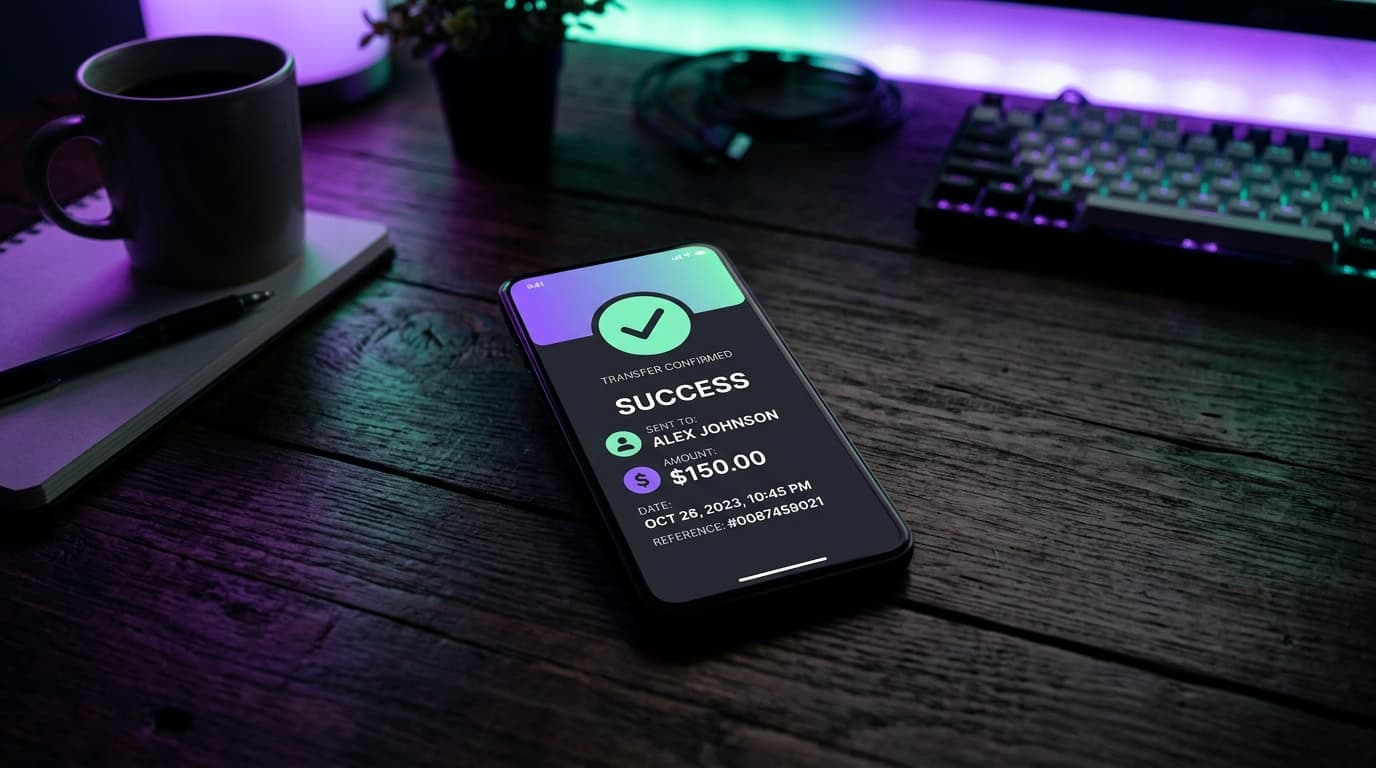
An instant transfer reaches the payee's account in under ten seconds, at any hour, seven days a week, and since January 2025 it cannot cost more than an ordinary transfer. The rule applies to neobanks too. Four frictions remain, and nobody mentions them when you open the account.
Ten seconds, seven days a week, no surcharge
The European timetable did the whole job in eighteen months. Regulation (EU) 2024/886 required euro-area banks first to be able to receive an instant transfer, then to send one, then to check the payee's name before you confirm. Each step had its deadline, and all of them have passed.
| Deadline | Obligation in force | Scope |
|---|---|---|
| 9 January 2025 | Receiving instant euro transfers | Euro-area banks |
| 9 January 2025 | Price no higher than an ordinary transfer | Euro-area banks |
| 9 October 2025 | Sending instant euro transfers | Euro-area banks |
| 9 October 2025 | Payee verification before confirmation | Euro-area banks |
| 9 January 2027 | Receiving, then sending, for non-euro-area providers | European Union |
Timeline built from the text of the regulation, consulted on 9 September 2026.
The ten-second window is not a marketing promise. It is a regulatory maximum, measured from the moment the order is received to the moment the amount is available on the payee's account, Sunday night and 15 August included. In practice, mine land in three or four seconds.
Are instant transfers really free in Belgium?
Yes, in the sense that they can no longer be priced above an ordinary transfer. If your bank charges nothing for a classic transfer, it can charge nothing for the instant one.
Public broadcaster RTBF went through the Belgian providers at the deadline: the surcharges that used to exist, often a few dozen cents per operation, disappeared overnight. That was not generosity, it was the law.
One nuance matters. The free part is the instant premium, not the account itself: a bank that charges for transfers made at a branch still charges for them, instant or not. At the neobanks the question never arose, because instant was already the default long before the regulation made it compulsory. Revolut, N26 and bunq were sending over SEPA Instant while most Belgian banks were still billing for it.
That is the one battle the neobanks won and then lost: their speed advantage evaporated the day it became mandatory for everybody.
Domiciliation, standing order, transfer: three separate flows
Three mechanisms take money out of your account every month, and they do not follow the same rules. Mixing them up is expensive, because the rights attached to each one are entirely different.
A domiciliation is a mandate you sign in favour of a creditor. He then decides the amount and the date of each collection, with a duty to warn you beforehand. The word is Belgian: a French reader calls the same thing a SEPA direct debit, and his own "domiciliation bancaire" means something else, the bank where his account is held. The European mechanism behind it, though, is identical on both sides of the border.
A standing order is the exact opposite. You set the amount, you set the date, and you change or cancel it whenever you like from your app, without asking anyone. Rent belongs in that box. An energy bill that shifts every quarter does not.
An instant transfer does not repeat. It is a one-off, decided on the spot, executed in seconds, and irrevocable once gone.
| Flow | Who triggers it | Amount | Cancellable? | Refund |
|---|---|---|---|---|
| Domiciliation | The creditor | Variable, set by him | Mandate revocable at any time | No reason needed for 8 weeks; 13 months if unauthorised |
| Standing order | You | Fixed, chosen by you | Yes, until execution | Not applicable |
| Ordinary transfer | You | Free | Yes, until execution | Not applicable |
| Instant transfer | You | Free, subject to a limit | No, irrevocable | Return of funds only with the payee's agreement |
Table built from the SEPA rules and from the guidance published by Febelfin, the Belgian financial sector federation, consulted on 9 September 2026.
The eight weeks in the third column are the least known right on that list, and the most useful. A friend was charged the same telecom fee twice in March; he thought he had to argue with the operator, when a dispute form filed with his bank was enough to get the money back with no justification required. A standing order gives you no such right, since you triggered it yourself.
Not every neobank handles domiciliations with the same ease, and the question really bites when your IBAN does not start with BE. We cover those refusals in our article on holding a foreign IBAN in Belgium.
Why does the payee's name trip up on a neobank?
Since 9 October 2025, your bank queries the payee's bank before letting you confirm, and compares the name you typed with the real account holder. Three answers are possible: exact match, close match, or no match at all.
The check is free and has no blocking power. Consumer organisation Test-Achats made the point at launch: the screen warns you, you decide. Override a warning and send the money to the wrong place, and part of the responsibility shifts onto you.
That is where a neobank hurts. The name registered with a foreign provider is not always the one on your Belgian identity card. A first name you never use, a double surname shortened at sign-up, an accent lost in an English-language form, and the answer flips to close match. Nothing serious, but the amber screen worries the payer, and I have watched a client refuse to settle an invoice for that reason alone.
My bunq account is registered under my full civil-status first name, which nobody ever uses. The result: every incoming transfer triggers a warning on the sender's side, and they call me to check. Three times in two months. I ended up sending a screenshot of my account details with every payment request, which fixes the problem before it happens rather than after. The workaround looks improvised, it slightly is, and I have found nothing better as long as the provider will not let me correct the account title without going through a full identity check, ID document and selfie included, over a preferred first name.
The fix is one line long: give out the exact name shown in your account details screen, not the one on your letterbox.
What limit applies, and who sets it?
No Belgian law caps a transfer between two domestic accounts. Providers set their own limits, and the European regulation only requires them to let you set yours, per day or per operation, and to change it whenever you want.
The large Belgian banks apply limits in the region of 25,000 to 50,000 euros per day or per operation depending on the case, with variations by channel and by how long the account has been open. Neobanks work differently: the ceiling often depends on the verification level reached and on the account history, and it is read inside the app rather than in a pricing brochure.
I discovered mine on a Friday afternoon, trying to send the deposit for a kitchen. Flat refusal. The payment went through the next day, after raising the limit in the settings, but the supplier had already given the slot to somebody else.
The lesson is that a limit is something you check before the big payment, never during it. Twenty seconds in the app settings saves you a weekend of irritation.
Wero and Bancontact are not instant transfers
Wero runs on the same rails as the instant transfer, but uses a phone number as the address. In Belgium it is gradually replacing Payconiq and is offered by seven banks, none of which is a neobank.
Bancontact plays a different game altogether: it is a card payment scheme, the Belgian debit-card network, not an account-to-account transfer, and neobanks still have no access to it. We cover that in our article on Bancontact and the neobanks.
Six checks before you hit send
Irrevocability changes your habits. On an ordinary transfer, a mistake leaves you a few hours to call your bank; on an instant one, there is no window at all.
- The exact account holder name, copied from the account details screen and not from an address book.
- The IBAN checked character by character, especially the two digits that follow the country code.
- Today's limit, verified in the app before any four-figure amount.
- The match shown on screen: a close match is understandable, no match at all deserves a phone call before you go further.
- The currency of the receiving account, because a multi-currency account can take euros and display them elsewhere.
- The structured communication, when the payee provides one, without which the payment lands unlinked to the invoice.
A seventh, for cases of genuine doubt: send one euro first. The name match appears at that point, and the test costs the price of a coffee you skip.

In short
The instant transfer has become the European norm: free, available seven days a week, and impossible to claw back once gone. Its real novelty is not the speed, which the neobanks already offered, but the payee name check, which shifts part of the risk onto whoever pays. For an account held with Revolut, N26, bunq or Wise, the useful precaution concerns the account title rather than the IBAN. And for anything that repeats every month, a domiciliation and a standing order remain two different tools, with two different levels of protection. Our comparator lines up the limits and the fees of the neobanks available in Belgium.
This article provides practical information and is neither legal advice nor investment advice.
Sources: Regulation (EU) 2024/886 on instant credit transfers in euro (text consulted on 9 September 2026), Febelfin (instant transfers and verification of payee), Test-Achats (introduction of payee verification, and its file on the reliability of instant transfers), RTBF (end of surcharges at Belgian banks), public Wero documentation, public terms of Revolut, N26, bunq and Wise consulted on 9 September 2026.
Cartes & paiements comparator
Compare all cartes & paiements side by side.
Compare now →
Frequently asked questions
Maxime suit le secteur des néobanques et de la fintech belge depuis près de dix ans. Ancien conseiller en agence devenu analyste indépendant, il ouvre et teste lui-même les comptes qu’il compare, décortique les grilles tarifaires ligne par ligne et traque les frais cachés derrière les offres « gratuites ». Son objectif : aider les Belges à payer moins et choisir une banque qui colle vraiment à leur usage, sans jargon ni argument commercial.