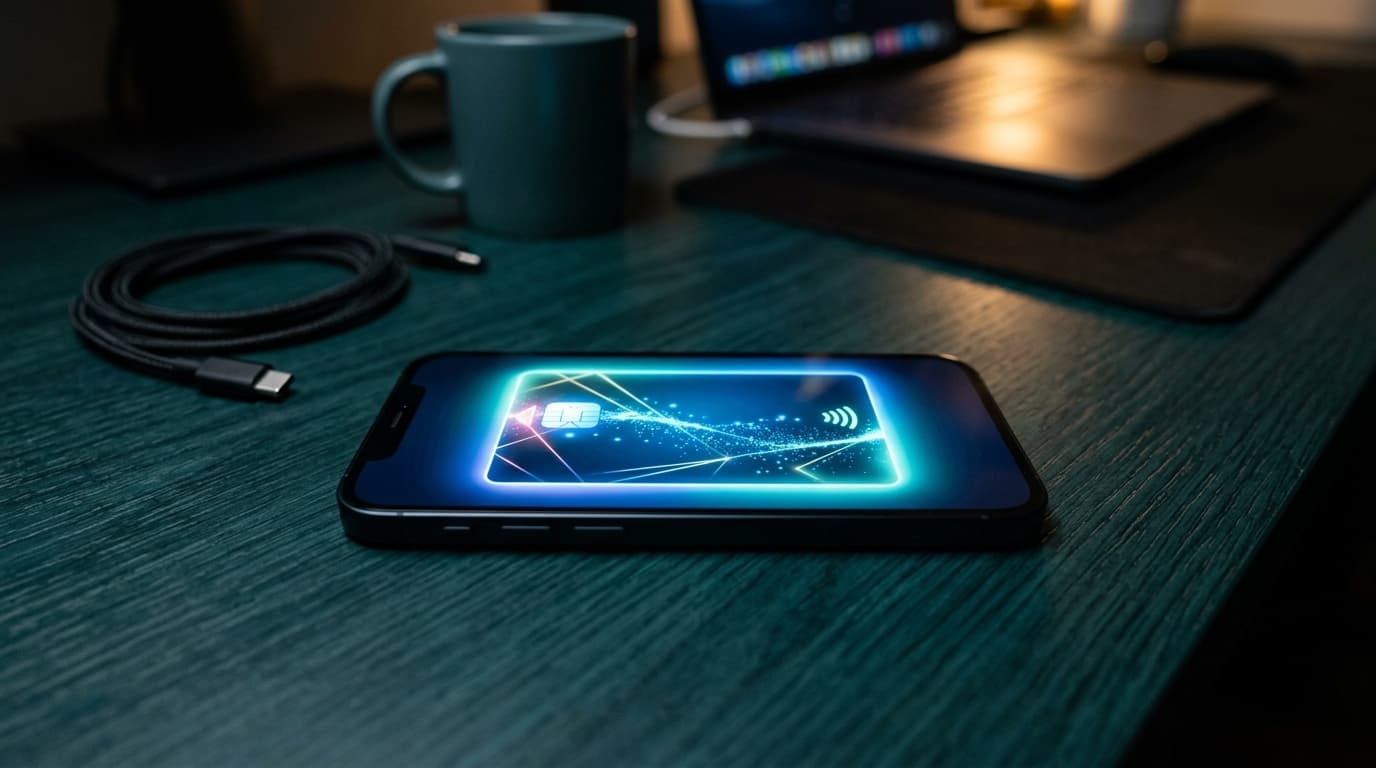
A virtual card is a card number with no plastic, created in seconds inside an app to pay online without exposing your real account. Every neobank offers one, but they are not equal: number of cards, disposable cards, Belgian IBAN, deposit protection. Here is how I separate them.
Which neobank offers the best virtual card in Belgium?
For online shopping safety, Revolut is ahead: it is the only major neobank to offer true single-use disposable cards, free from the Standard plan. For the number of cards, bunq follows with up to 25 virtual cards, and N26 as well as Wise offer classic cards, handy but not disposable.
The nuance matters quickly. A "normal" virtual card keeps the same number: if a merchant is hacked, that number leaks just like a physical card's. A disposable card changes number after each payment. I open and test these accounts myself, and the habit I have picked up is to create a disposable Revolut card for every new merchant I do not know. When a site tried to replay a charge a few weeks later, the card was already dead: nothing went through.
What is a virtual card, and a disposable card?
A virtual card is a payment card with no physical support: a number, an expiry date and a security code generated in the app, usable to pay online and in Apple Pay or Google Pay. A disposable card is a sub-category: a single-use virtual card whose number regenerates automatically after each purchase.
The distinction is useful because they do not serve the same need. The classic virtual card is mainly about compartmentalising: you dedicate one to subscriptions, another to everyday purchases, a third you freeze between two trips. The disposable card is for buying once on a dubious site without leaving a reusable number behind. Worth watching in the small print: some neobanks cap the number of free virtual cards, and a disposable card is unsuited to recurring payments (the subscription breaks at renewal).
Revolut, N26, bunq or Wise: how good are their virtual cards?
None wins on every front. Revolut leads on safety, bunq on the number of cards, N26 on simplicity, Wise on multi-currency. Here are the base conditions, accurate as of June 2026 — fee schedules move often, always check the current offer before opening.
| Criterion (base plan) | Revolut | N26 | bunq | Wise |
|---|---|---|---|---|
| Virtual cards included | Up to 20 (free Standard) | 1 (included) | Up to 25 (paid plans) | Up to 3 (free) |
| Single-use disposable card | Yes | No | No | No |
| Network | Visa / Mastercard | Mastercard | Mastercard | Mastercard |
| Belgian IBAN (BE) | Yes (since May 2025) | No (DE) | No (NL) | Yes (Wise Europe SA, Brussels) |
| Bancontact | No | No | No | No |
| Deposit protection | Bank (LT), €100,000 | Bank (DE), €100,000 | Bank (NL), €100,000 | No (e-money) |
In practice, for everyday use: if the priority is paying online without stress, Revolut and its disposable cards are the safest choice, and free. If you just want a simple virtual card backed by a German banking licence, N26 is enough. To multiply cards by project (rent, subscriptions, business spending), bunq goes furthest, but its plans are paid. And if you juggle several currencies, Wise remains unbeatable on the exchange rate, at the price of a status that is not a bank's.
Does a virtual card really protect your online purchases?
Yes, provided you use it for what it does well. A virtual card isolates your real account number: the merchant only sees a secondary number, which you can freeze or delete in two taps if something looks off. The disposable card pushes the logic further by making the number unusable after the purchase.
It is not magic protection. It replaces neither strong authentication (the code you receive to confirm a payment, required by the European PSD2 directive) nor vigilance against phishing. But it limits the damage: if a number leaks, you block a secondary card without touching your main account or your direct debits. The edge case to know: for a subscription (streaming, gym), never use a disposable card, or the charge fails at renewal and the service is cut off. Keep the disposable card for one-off purchases, and a fixed virtual card for recurring payments.

Can you pay with Bancontact using a neobank virtual card?
No, and this is the Belgian limit no virtual card solves. None of these neobanks supports Bancontact, the network that handles about 85% of in-store card payments in Belgium. Their virtual cards run on Visa or Mastercard, contactless or via the phone's wallet.
In practice, that is enough in most shops, which accept Visa and Mastercard contactless. But some payment points stay purely Bancontact: parking meters, some charging points, a few Belgian e-commerce sites in Bancontact-only mode. The conclusion is simple: a neobank, virtual or not, does not replace a Belgian account on its own. The combination I recommend is an account with a Belgian bank for Bancontact and credit, and a neobank for online and foreign payments. To put the offers side by side, our comparison tool lists the neobanks active in Belgium.
What is a neobank virtual card worth it for?
Start from your usage rather than an abstract ranking:
✓ Pros
- Purchases on unknown sites: Revolut's disposable card protects your real account
- Compartmentalising spending: one virtual card per subscription or project, freeze at will
- Phone payment: the virtual card adds to Apple Pay or Google Pay in seconds
- Travel and currencies: Wise pays at the real exchange rate, no nasty surprise
✗ Cons
- Bancontact payments: impossible, keep a Belgian account alongside
- Recurring subscriptions: the disposable card breaks at renewal, use a fixed one
- Need for deposit protection: Wise does not offer it (e-money institution)
- Preference for a branch: these players are 100% online
For a one-off purchase on a site I do not know, I do not overthink it: a disposable Revolut card, and I forget about it. For my subscriptions, I keep a dedicated fixed virtual card, which lets me cut everything at once the day I change my mind. And for a trip outside the euro zone, I switch to Wise for the rate. Our quiz gives a recommendation in two minutes based on your spending profile.
In short
The best neobank virtual card in Belgium depends on your usage, but Revolut stands out for online safety thanks to its free disposable cards. bunq goes furthest on the number of cards, N26 on simplicity, Wise on currencies and the Belgian IBAN. None do Bancontact: the virtual card complements a Belgian bank, it does not replace it. Remember to declare these accounts to the tax authorities, and check the deposit protection before leaving large sums there. To compare line by line, use our comparison tool.
Sources: National Bank of Belgium (Central Point of Contact, deposit guarantee), FSMA (register of authorised institutions), European PSD2 directive (strong authentication) and SEPA Regulation EU 260/2012, fee schedules of Revolut, N26, bunq and Wise consulted in June 2026.
Cartes & paiements comparator
Compare all cartes & paiements side by side.
Compare now →
Frequently asked questions
Maxime suit le secteur des néobanques et de la fintech belge depuis près de dix ans. Ancien conseiller en agence devenu analyste indépendant, il ouvre et teste lui-même les comptes qu’il compare, décortique les grilles tarifaires ligne par ligne et traque les frais cachés derrière les offres « gratuites ». Son objectif : aider les Belges à payer moins et choisir une banque qui colle vraiment à leur usage, sans jargon ni argument commercial.