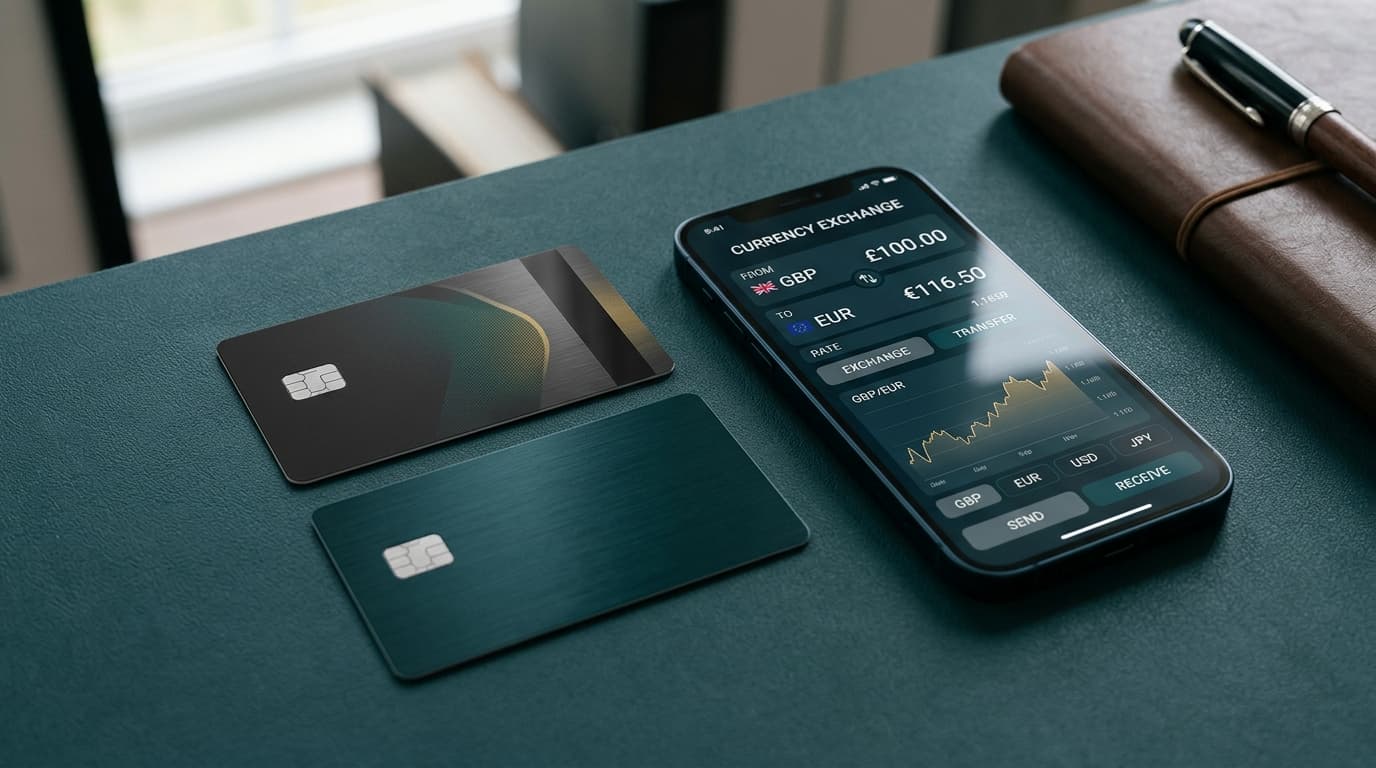
Two apps every Belgian traveller ends up crossing paths with, two different jobs. Wise is first a specialist in currency exchange and international transfers; Revolut targets the everyday account that follows you everywhere. To choose in Belgium, the right question isn't "which is best", but which one fits what you actually do with your money abroad. Here's how I tell them apart.
Wise or Revolut: which to choose in Belgium?
For currency exchange and international transfers, Wise is the cleaner pick: real interbank rate continuously, transparent fees, no subscription. For a versatile everyday account, with a Belgian IBAN and a free card, Revolut keeps the edge. The point to remember: Wise isn't a bank in the full sense, it's a multi-currency account.
The distinction changes everything, because these two accounts don't play the same role. Wise does one thing and does it very well: convert and send money at the real rate, in dozens of currencies, with local details to receive payments. Revolut casts a wider net: free card, savings, sub-accounts, and a Belgian IBAN since May 2025 that clears most domiciliation friction. I've opened and used both over the past few years — to pay a supplier in dollars, I go through Wise without thinking; for a weekend in London, it's Revolut that stays in my pocket.
Wise or Revolut: what are the differences in Belgium?
The gap comes down to four points: the status (licensed bank for Revolut, electronic money institution for Wise), the exchange rate, the fee structure and the purpose of the account. The rest — debit card, mobile app, contactless payment — is very similar.
Here are the entry-level terms, current as of summer 2026. Neobank pricing changes often: always check the current offer before opening an account.
| Criterion (entry plan) | Wise | Revolut Standard |
|---|---|---|
| Status | Electronic money institution | Licensed bank (Revolut Bank UAB) |
| Exchange rate | Real interbank, weekends included | Real up to the monthly cap, then a fee |
| Entry price | Free (card ~€7 one-off) | Free |
| Deposit guarantee | No (safeguarded funds) | Yes, €100,000 (Lithuanian fund) |
| IBAN | EUR details, often a Belgian IBAN | Belgian (BE) since May 2025 |
| Bancontact | No | No |
In practice, for everyday use: if you mainly want to send money abroad and hold several currencies without being nibbled by the exchange, Wise is built for it. If you want a free account that almost replaces a Belgian bank day to day, Revolut is the more obvious pick.

Wise or Revolut: which has the better exchange rate?
On pure currency exchange, Wise wins. It applies the real interbank rate at all times — the one you see on Google — with no markup, weekends included, with fees shown upfront from around 0.4% depending on the currency and amount.
Revolut also gives the real rate, but with conditions. On the free Standard plan, exchange at the interbank rate is capped (around €1,000 per month); above that, a fee of about 1% applies. And at the weekend, Revolut adds a markup (around 1% on Standard, 0.5% on Plus) because the currency markets are closed. I paid for a flight in pounds one Sunday evening via Revolut: the bill wasn't bad, but Wise would have given me the flat rate without that little weekend surcharge. For large amounts or exotic currencies, the gap widens in Wise's favour; for small one-off weekday payments, the two are on par.
Wise or Revolut: which costs less?
Neither has a compulsory subscription, so the real question is: where do the fees sit? With Wise, everything is in the transfer — a transparent percentage (from around 0.4%) plus a small fixed fee, and a physical card billed once (around €7). With Revolut, the Standard plan is free, but the free caps (withdrawals, exchange) fill up fast once you travel.
So the real annual cost depends on your use. To send €5,000 abroad, Wise will almost always be cheaper thanks to the real rate. To withdraw €150 on holiday and pay for a few coffees, Revolut Standard is enough at no cost. Watch the small print: with Revolut, withdrawal fees above about €200 per month and the exchange fee beyond the cap; with Wise, the fixed fee that weighs proportionally more on small transfers. Both scale up (paid Revolut plans up to around fifteen euros a month, Wise "Interest" on balances), but for the entry level, neither breaks the bank.

Are your deposits guaranteed with Wise and Revolut?
This is where the two really diverge, and it's the most misunderstood point. Revolut is a licensed bank: your deposits are guaranteed up to €100,000 per depositor, via the Lithuanian guarantee fund of its Revolut Bank UAB entity. Wise is an electronic money institution, not a bank: your money is safeguarded in partner banks, but does not fall under the €100,000 deposit guarantee scheme.
What does it change in practice? For money passing through — you convert, you send, the balance doesn't sit idle — Wise's safeguarding protects your funds properly. But for large sums that would stay parked for months, Revolut's banking guarantee is more reassuring. It's one more reason not to keep your main savings on a neobank, whichever it is: your core funds belong in a Belgian account with a deposit guarantee. If in doubt about a provider's status, its licence can be checked with the FSMA and the National Bank of Belgium.
Wise or Revolut: which for an everyday account in Belgium?
To live in Belgium day to day, Revolut is the better fit. It issues a Belgian IBAN (BE) to new accounts since May 2025, offers a free card, savings and sub-accounts, and works as a secondary current account. Wise provides euro details — often with a Belgian IBAN too — but stays designed as a multi-currency account built for transfers, not as a main account.
The IBAN nuance is worth a pause. A foreign IBAN still runs into direct-debit refusals here: I've seen an energy payment and a health-fund contribution rejected because the IBAN started with a non-Belgian prefix — technically banned by the SEPA regulation, but still common practice. With Revolut and its Belgian IBAN, that friction disappears for salary and direct debits. And above all: neither Wise nor Revolut supports Bancontact, the network behind about 85% of in-store card payments in Belgium. Their cards run on Mastercard or Visa, accepted almost everywhere, but some Belgian parking machines, terminals and sites still require Bancontact. So neither fully replaces a Belgian bank.
Wise or Revolut for which profile?
Start from your actual use rather than a one-size verdict:
✓ Pros
- International transfers and large amounts: Wise, at the real rate
- Holding and managing several currencies: Wise and its local details
- Everyday account with a Belgian IBAN and a free card: Revolut
- Short trips, withdrawals and one-off payments: Revolut Standard
✗ Cons
- Large idle balances: neither one, keep a Belgian account with a deposit guarantee
- Bancontact-only payments (parking, some sites): neither Wise nor Revolut
- Weekend exchange on Revolut Standard: expect a markup
- Frequent small transfers on Wise: the fixed fee weighs proportionally more
For a freelancer invoicing internationally, Wise saves time and money on every conversion. For a student or a household that wants a free, practical second account in Belgium, Revolut ticks more boxes. Many people I know keep both: Wise for the currencies, Revolut for the everyday wallet. Our quiz suggests a recommendation in two minutes based on your profile, and the comparator puts both offers side by side.
In short
Between Wise and Revolut, there's no universal winner, but two jobs. Wise is the benchmark for currency exchange and international transfers: real rate continuously, transparent fees, but no deposit guarantee and a role limited to multi-currency. Revolut is the versatile everyday account, with a Belgian IBAN, a free card and a banking guarantee, at the price of exchange caps quickly reached and a weekend markup. Neither supports Bancontact, neither alone replaces a Belgian card. To go further, compare every offer line by line in our comparator, or read our guide to the best neobank for travel if fees abroad are your priority.
Sources: National Bank of Belgium (deposit guarantee, Central Contact Point), FSMA (register of licensed institutions), SEPA Regulation (EU) No 260/2012, Wise and Revolut pricing terms consulted in July 2026.
Frais à l’étranger comparator
Compare all frais à l’étranger side by side.
Compare now →
Frequently asked questions
Maxime suit le secteur des néobanques et de la fintech belge depuis près de dix ans. Ancien conseiller en agence devenu analyste indépendant, il ouvre et teste lui-même les comptes qu’il compare, décortique les grilles tarifaires ligne par ligne et traque les frais cachés derrière les offres « gratuites ». Son objectif : aider les Belges à payer moins et choisir une banque qui colle vraiment à leur usage, sans jargon ni argument commercial.